At Hawthorn’s gym, we see many incorrect assumptions about older bodies…many people over 60 are told:
“Heavy is dangerous.”
“You should exercise completely differently at 60 than at 30.”
“As you get older, the goal is maintenance, not improvement.”
None of these are rooted in modern evidence. Strength, power, mobility, and aerobic capacity all remain trainable well into later decades if approached appropriately, and they’re essential to maintaining independence, confidence, and quality of life into the later years.
But there’s one myth we’d love to put to bed - that ‘slowing down is just part of getting older.’
Yes, our bodies change with age — that’s normal. But how much we see change and how quickly is far more within our control than most people realise. Yet so many of us don’t - a 2018 CSIRO article reports on a national survey showing many people over 50 don’t prioritise resistance exercise.
At Visions, our team has seen it first-hand. Our local Hawthorn-ites who are in their 60s, 70s and beyond don’t come in to ‘bulk up’ - they come in because they want to feel good, move confidently, lower their health risks and ultimately keep enjoying life on their own terms.
And guess what? The science backs them up.
Modern research now tells us that regular gym-based training plays a powerful role in protecting the brain, the body, and even our sense of connection as we age. Here are the three biggest reasons why it matters so much to hit the gym after 60.
Let’s begin with understanding the risks.
What Actually Changes as We Age (If We Don’t Actively Push Back)
As we age, our bodies change. Some of the key areas include:
Loss of muscle mass (sarcopenia) — muscle declines by around 8–10% per decade, accelerating later in life, reducing strength and independence
Declining aerobic fitness (VO₂max) — aerobic capacity drops by roughly 10% per decade, strongly impacting cardiovascular health and longevity
Reduced strength and power — the ability to produce force quickly declines faster than strength, increasing fall risk and slowing reactions.
Loss of balance, mobility and range of motion — reduced joint range of motion and stability make everyday tasks harder and raise injury risk.
Increased risk of chronic disease — including cardiovascular disease, type 2 diabetes, and metabolic decline
Cognitive decline and brain health — structural and functional brain changes can begin decades before symptoms appear
Fear-driven movement avoidance — pain, stiffness, or fear of injury can quietly reduce activity, accelerating physical decline.
Importantly, these are not inevitable outcomes of ageing — they are modifiable processes.
So, how does training in the gym make a difference?

1. Training Reduces Cognitive Decline and Dementia Risk
Understandably, one of the biggest concerns people have as they get older isn’t physical — it’s about the cognitive changes:
Memory lapses,
Slower thinking,
The fear of dementia.
This is where strength training has quietly become one of the most exciting tools in preventative health.
A landmark study from the University of Sydney looked at older adults with mild cognitive impairment — a condition that significantly increases the risk of developing dementia. Participants completed just 90 minutes per week of supervised strength training over six months.
The results were remarkable.
MRI scans showed that areas of the brain most vulnerable to Alzheimer’s disease — particularly the hippocampus, which plays a critical role in memory — deteriorated far more slowly in the strength-training group. In some regions, degeneration was almost completely halted. Even more compelling, participants also showed measurable improvements in cognitive function, not just brain structure. Perhaps most encouraging of all, the protective effects were still present up to 12 months after the training stopped.
In simple terms: Lifting weights didn’t just make participants stronger — it helped protect their brains. And cardiovascular exercise also plays an important role here, too.. Aerobic training improves cerebral blood flow and is consistently associated with better cognitive outcomes and reduced dementia risk in older adults.
This is why gym-based strength and cardio training is increasingly being discussed not just as exercise, but as part of a broader strategy for brain health and dementia risk reduction.

2. Training Reduces Physical Risk and Preserves Independence
From around the age of 30, we naturally lose muscle mass each decade if we don’t actively challenge it. By our 60s and beyond, that process — known as sarcopenia — can seriously affect quality of life.
Sarcopenia is strongly linked to:
Increased fall risk
Loss of independence
Higher rates of hospitalisation
Greater risk of chronic disease and early mortality
The Australian Institute of Health and Welfare consistently reports that falls are one of the leading causes of injury-related hospital admissions in older Australians. Strength loss, reduced balance, limited mobility, and declining cardiovascular fitness are major contributors.
The good news? Resistance and cardio training works.
Australian research shows that older adults completing two to three structured strength sessions per week can significantly improve muscle mass, bone density, balance, and functional strength — even if they’ve never trained before. Improvements in cardiovascular fitness further reduce disease risk and increase stamina for daily life.
Maintaining mobility and range of motion is equally important. Strength-based movement through full, controlled ranges helps people walk more confidently, reach overhead, step safely, and feel less stiff and restricted day-to-day.
Strength training is also associated with:
Improved blood pressure
Better blood sugar control
Reduced risk of cardiovascular disease
Improved joint stability and mobility
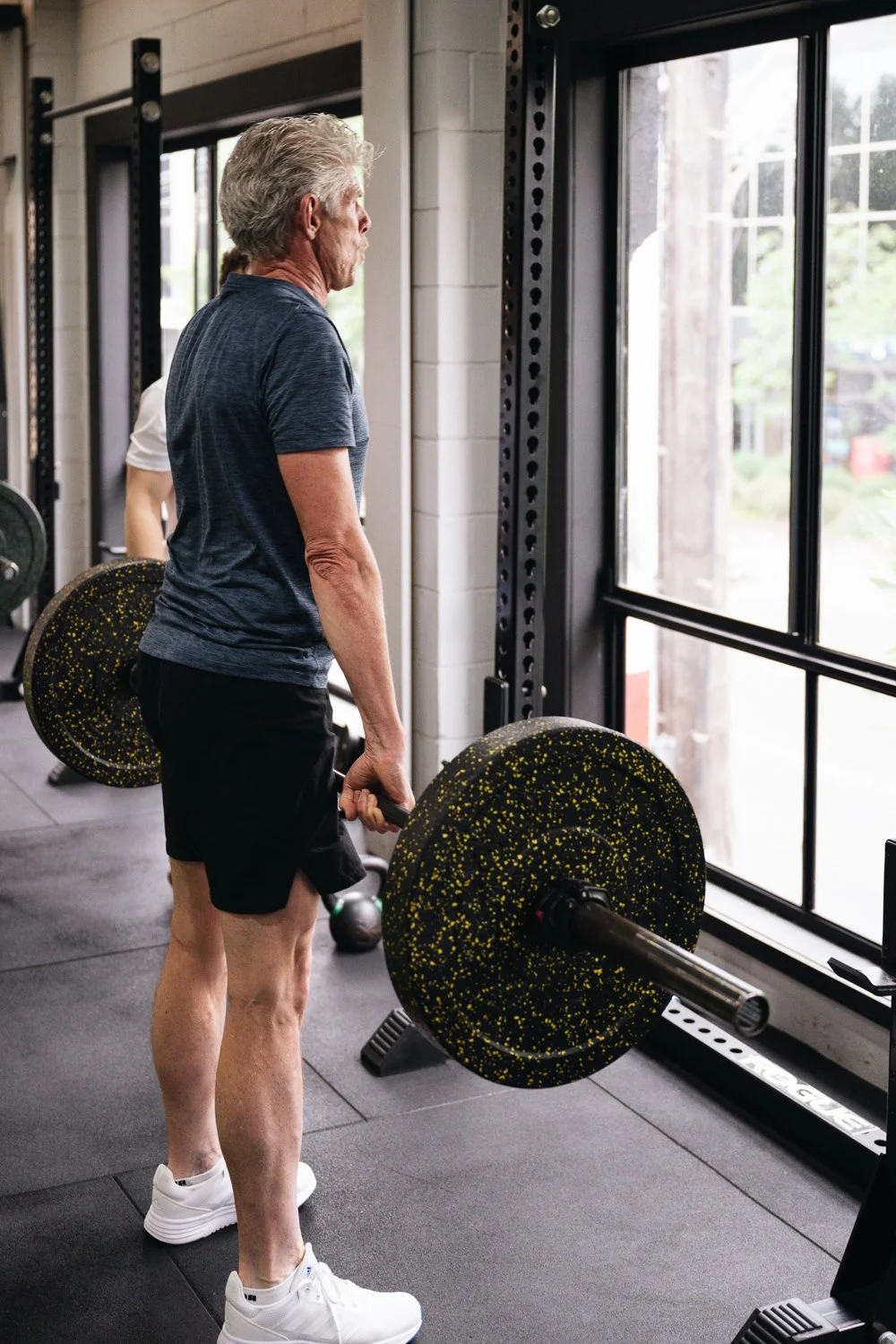
At Visions, this is exactly why gym training for over 60s isn’t about ‘going hard’ — it’s about training smart. Building strength in movements that carry over to real life: standing up, stepping, reaching, lifting, and staying steady on your feet.
Because strength isn’t about looking strong.
Cardio isn’t about punishment.
Mobility isn’t about stretching for the sake of it.
They’re about staying independent.

3. Training Builds Social Connection (and That Matters More Than You Think)
There’s one benefit of gym training that rarely gets enough attention: connection.
Loneliness and social isolation are increasingly recognised as serious health risks for older adults. The ABC recently reported on the link between social isolation and higher rates of depression, cognitive decline, and even cardiovascular disease.
Regular gym attendance — especially in a community-focused environment — provides routine, accountability, familiar faces and a sense of belonging.
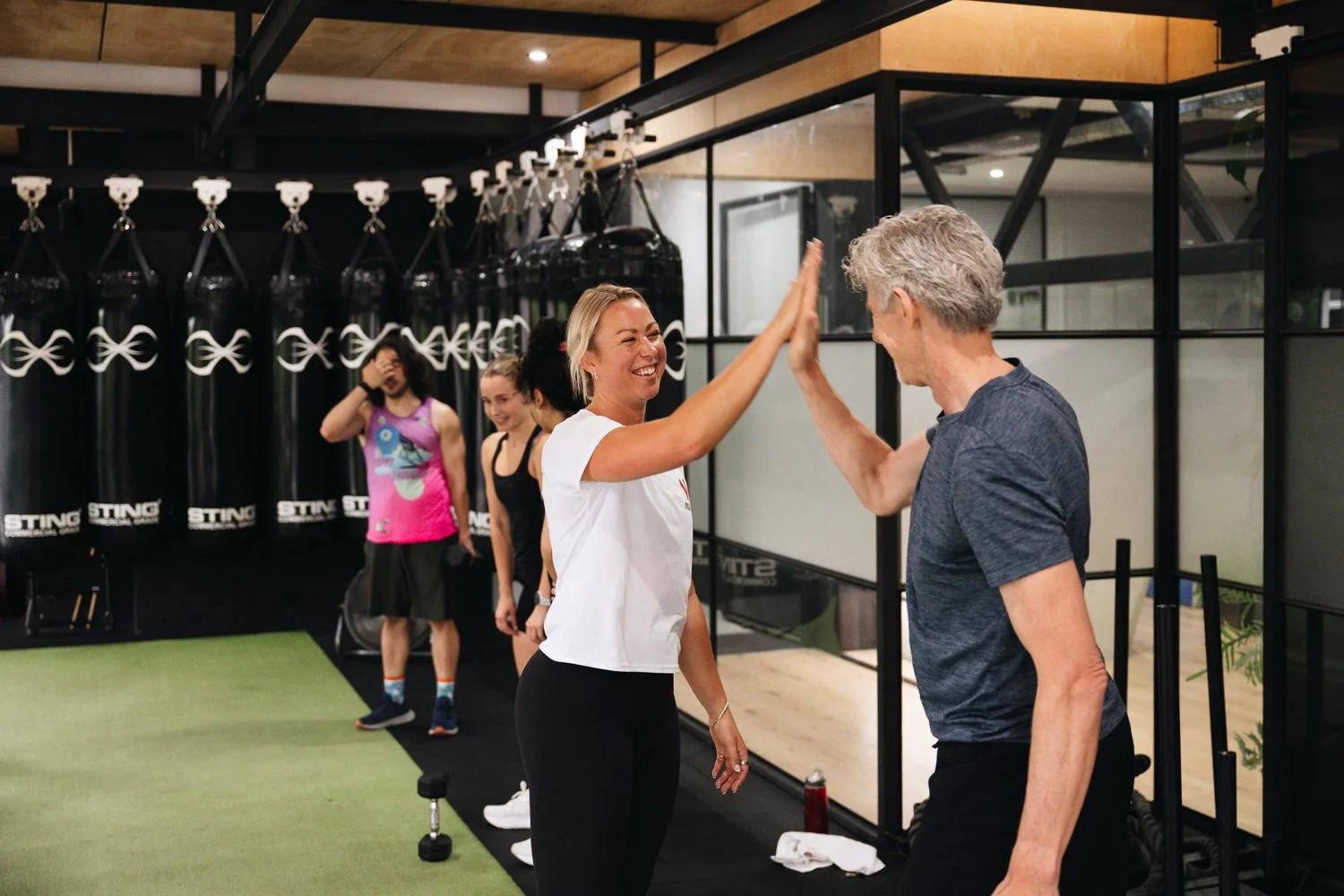
At Hawthorn’s gym, this shows up every day. Conversations before class. A shared laugh during a session. Encouragement from coaches and other members. These moments matter.
Training becomes more than exercise — it becomes a reason to show up.
And when people feel connected, they’re far more likely to stay active, consistent, and engaged with their health.
What Comes Next?
So here’s the big picture.
After 60, gym training becomes less about chasing aesthetics or pushing limits for the sake of it. It matters because it helps protect the brain, reduce physical decline, and keep people connected — three pillars that underpin quality of life as we age.
But understanding why training matters is only half the story.
The next — and arguably most important — question is: What kind of training actually delivers these benefits?
Not all exercise is created equal, and random movement alone isn’t enough to protect the brain and body long-term. Research consistently shows that the biggest returns come from training that targets four key areas: strength, mobility, balance, and agility.
The team at Visions are developing an active aging assessment for our over 60s group.
Utilising the brains of our qualified strength and conditioning coaches and backed by Mark and the team at Technological Phyiso, we’re really excited to bring this to you over the next few months. It will involve assessment and an action plan tailored to your results, broken into those important areas of strength, mobility, balance and agility.
In the meantime, in our next blog we’ll break down each of these in detail and explain how gym-based training brings them together in a safe, practical, and effective way — especially for adults over 60.
Because knowing why exercise matters starts the conversation.
Knowing how to train well is what changes outcomes.